Abstract :
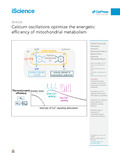
[en] Energy transduction is central to living organisms, but the impact of enzyme regulation and signaling on its thermodynamic efficiency is generally overlooked. Here, we analyze the efficiency of ATP production by the tricarboxylic acid cycle and oxidative phosphorylation, which generate most of the chemical energy in eukaryotes. Calcium signaling regulates this pathway and can affect its energetic output, but the concrete energetic impact of this cross-talk remains elusive. Calcium enhances ATP production by activating key enzymes of the tricarboxylic acid cycle while calcium homeostasis is ATP-dependent. We propose a detailed kinetic model describing the calcium-mitochondria cross-talk and analyze it using nonequilibrium thermodynamics: after identifying the effective reactions driving mitochondrial metabolism out of equilibrium, we quantify the mitochondrial thermodynamic efficiency for different conditions. Calcium oscillations, triggered by extracellular stimulation or energy deficiency, boost the thermodynamic efficiency of mitochondrial metabolism, suggesting a compensatory role of calcium signaling in mitochondrial bioenergetics.
Disciplines :
Physical, chemical, mathematical & earth Sciences: Multidisciplinary, general & others
Funding text :
V.V. is funded by the Complex Living Systems Initiative at the University of Luxembourg . F.A. and M.E. are funded by the Luxembourg National Research Fund , grant ChemComplex ( C21/MS/16356329 ). G.F. is funded by the European Union – NextGenerationEU – and by the program STARS@UNIPD with project “ThermoComplex”. F.A., A.S., and M.E. acknowledge financial support of the Institute for Advanced Studies of the University of Luxembourg through an Audacity Grant ( IDAE-2020 ). The experiments presented in this paper were carried out using the HPC facilities of the University of Luxembourg 84 – see hpc.uni.lu .
Scopus citations®
without self-citations
11