Abstract :
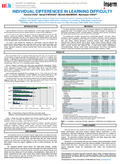
[en] Correlates of adolescent learning difficulty may include a number of issues sustained across the life course but this is little documented. This study assessed the associations of learning difficulty with socioeconomic, behavior and health-related difficulties in early adolescence.
This study included 1,559 middle-school adolescents from north-eastern France, who completed a self-administered questionnaire gathering socioeconomic characteristics (gender, age, nationality, family structure, father’s occupation, and family income), measured body mass index, alcohol/tobacco/cannabis/hard drug use, health status, back pain, allergy, depressive symptoms (Kandel scale), sustained physical/verbal violence, sexual abuse, social support, learning difficulty (a 4-item scale: lesson understanding, concentration/lesson learning, follow school pace/constraints, and school interrogations, range 0-4), grade repetition, low school performance (last trimester, <10/20), and school dropout contemplation at 16 years. Data were analyzed using multiple linear and logistic regression models. Learning difficulty score was strongly related to grade repetition (gender-age-adjusted odds ratio 1.56, 95% CI 1.38-1.76), low school performance (2.39, 2.08-2.75) and school dropout contemplation (1.79, 1.50-2.13). Learning difficulty was strongly related to socioeconomic factors (gaRC reaching 0.76). It was also related to alcohol, tobacco, cannabis, and hard drug use (0.22, 0.74, 0.71 and 1.25, respectively), overweight (0.17), obesity (0.43), poor health status (0.45), back pain (0.21), allergy (0.11), depressive symptoms (0.69), sustained violence (0.41), sexual abuse (0.72), and poor social support (0.22). These associations were partly explained by socioeconomic factors (contribution reaching 54% for various factors; it was 109% for alcohol use). These findings suggest that prevention to limit learning difficulty and promote school achievement should focus on socioeconomic, behavior and health-related difficulties in early adolescence.