cluster qualitative analyse; index of Sorensen; N'Vivo 12
Abstract :
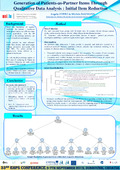
[en] Health psychology and public health aspire to find ways for evaluating the suffering of patients. Quantitative assessment of pain-related suffering exists, but methodological frameworks implying qualitative approach based on a direct communication with participants are missing. Our aim was to analyse the procedure generating pain and suffering-related items and explore the validity of their content. Volunteers were all right-handed and of European origin. After received information concerning the aims of the study, they signed a consent to accept the experimental pain stimulation protocols and to receive financial compensation. Descriptors of pain-related suffering were gathered through 106 semi-structured interviews of 31 particpants (16 men ;15 women), age 18-33 years. A thematic categorical content analysis on the transcriptions was conducted. Verbatim were extracted and classified under categories. Cluster analysis on word of verbatim using the index of Sorensen was performed with N’Vivo12. The content of each category was validated through consensus by multidisciplinary experts (some have lived the experimental pain stimulation). Then they formulated 70 items to capture the overall pain-related suffering experience. In accordance to theories and with the help of the Sorensen’s similarity analysis, a conceptual framework with different dimensions (physical, mental, etc.) has been discussed and elaborated. The list obtained constitutes a first classification for laboratory use and a basis for the development of a routine clinical suffering assessment tool. This generation process should guarantee that the items are acceptable, comprehensive and relevant (reflecting the lived experience of the participants) ensuring a content validity of the future questionnaire
Research center :
- Integrative Research Unit: Social and Individual Development (INSIDE) > PEARL Institute for Research on Socio-Economic Inequality (IRSEI)
Disciplines :
Public health, health care sciences & services
Author, co-author :
Bustan, Smadar
Anton, Fernand
ODERO, Angela ; University of Luxembourg > Faculty of Humanities, Education and Social Sciences (FHSE) > Department of Social Sciences (DSOC)
BAUMANN, Michèle ; University of Luxembourg > Faculty of Language and Literature, Humanities, Arts and Education (FLSHASE)
External co-authors :
yes
Language :
English
Title :
The Generation of suffering related items: A process integrating consensus experts and Sorensen’s similarity analysis.
Publication date :
2019
Main work title :
33 nd Annual Conference on the European Health Psychology Society. Methodology.Publisher: EHPS