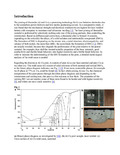
[en] The welding of Al and Cu is considered as difficult due to the formation of intermetallic compounds, which cause a brittle joint with increased electrical resistance. This paper investigates etching techniques that were used to contrast the intermetallic compounds for optical microscope analysis. A 0.5 mm AA-1050 sheet was welded to a 0.5 mm SF-Cu sheet in overlap configuration. The cross sections were etched by using 17 different reagents, including common Al-grade 2xxx etchants, Al-bronze etchants, and specific IMC etchants. A complete microstructural characterization, including the formation of intermetallic compounds, is presented. The experimental result showed that a clear distinction of metallurgic structures is possible, thus enabling a more detailed analysis of Al-Cu welds. It was found that etchants #09, #14, and #16 revealed best the four different intermetallic compounds θ-Al2Cu, η-AlCu, ζ-Al3Cu4, and γ-Al4Cu9.
Disciplines :
Science des matériaux & ingénierie Ingénierie mécanique
Auteur, co-auteur :
SCHMALEN, Pascal Guy ; University of Luxembourg > Faculty of Science, Technology and Communication (FSTC) > Engineering Research Unit
MATHIVANAN, Karthik ; University of Luxembourg > Faculty of Science, Technology and Communication (FSTC) > Engineering Research Unit
PLAPPER, Peter ; University of Luxembourg > Faculty of Science, Technology and Communication (FSTC) > Engineering Research Unit
Co-auteurs externes :
no
Langue du document :
Anglais
Titre :
Metallographic Studies of Dissimilar Al-Cu Laser-Welded Joints Using Various Etchants
Date de publication/diffusion :
15 novembre 2018
Titre du périodique :
Metallography, Microstructure, and Analysis
ISSN :
2192-9262
eISSN :
2192-9270
Maison d'édition :
Springer, New York, Etats-Unis - New York
Peer reviewed :
Peer reviewed vérifié par ORBi
Focus Area :
Physics and Materials Science
Projet FnR :
FNR10155468 - Closed-loop Control Of The Laser-braze Welding Process Of Dissimilar Materials, 2015 (01/09/2015-14/03/2019) - Pascal Guy Schmalen