Abstract :
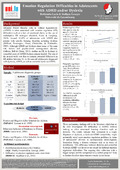
[en] Objectives: ADHD is commonly associated with emotion regulation (ER) problems. Although around 10-45% of adolescents with ADHD also present with specific learning disorders such as dyslexia, studies on ER in dyslexia or comorbid cases of ADHD/dyslexia remain limited.
The aim was to examine potential differences in ER abilities between 11 to 16-year-old adolescents diagnosed with ADHD, dyslexia as well as comorbid dyslexia/ADHD.
Method: Preliminary data from an ongoing research project was analyzed for 3 diagnostic groups (AD(H)D: n=15; dyslexia: n=12; dyslexia/AD(H)D: n=9) paired on age (F<1, n.s.), gender (X2(2)=0.68, p=.71) and IQ (F<1, n.s.). ER was investigated experimentally using a frustration inducing task (Behavioral Indicator of Resiliency to Distress; BIRD; Lejuez et al., 2006) while assessing adolescents’ subjective positive and negative affect before and after the task (PANAS-C; Laurent et al., 1999). Additionally, adolescents completed questionnaires on alexithymia (AQC, Rieffe, Oosterveld & Terwogt, 2006) and difficulties in ER (DERS-SF; Kaufman et al., 2016).
Results: Preliminary findings showed a significant effect of time (F(1,33)=6.46, p=.02, n2=.16) with higher negative affect reported after the task and a marginal diagnostic group effect (F(2,33)=3.05, p=.06, n2=.16) showing marginally higher negative affect for the comorbid group compared to the dyslexia group (p=.06). Marginally significant group differences (F(2, 33)=3.21, p=.05, n2=.16) also showed higher alexithymia scores for the comorbid group compared to the dyslexia group (p=.06) but alexithymia and post-task negative affect were not found to be correlated (r=.25, p=.13). No differences in self-reported ER difficulties were found (F(2,33)=2.52, p=.10, n2=.13) between the three diagnostic groups.
Conclusion: These preliminary findings indicate that, compared to a single diagnosis of dyslexia, a dyslexia/ADHD comorbidity might potentially entail less developed ER skills. The ongoing data collection (bigger sample, control group) will help to further elucidate these tentative results in the future.