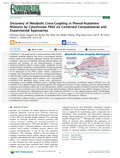
[en] This study unveils a novel cytochrome P450 (P450)-mediated metabolic pathway that drives cross-coupling between diverse phenol and arylamine pollutants. Phenols and arylamines constitute a large part of industrial chemicals, pharmaceuticals, and personal care products, yet the biotransformation of phenol-arylamine pollutant mixtures remains largely unexplored. Density functional theory calculations revealed that the rate-limiting rebound barriers of phenoxy and arylamino radicals formed through O-H/N-H abstraction by the P450 catalytic oxidant, Compound I, facilitate their dissociation from the heme, creating thermodynamically favorable conditions for subsequent nonrebound cross-coupling reactions. These proposed hybrid products were systematically identified and quantified using various mass spectrometry technologies across multiple biological systems, including human liver microsomes, recombinant human CYP3A4, mice, and zebrafish. From a physical organic chemistry perspective, the widespread occurrence of cross-coupling is driven by sufficient lifetime of phenoxy and arylamino radicals due to spin delocalization, and their concentration gradient sustained by persistent radical effects. Notably, yeast two-hybrid assays demonstrated that the phenol-arylamine hybrids exhibited supra-additive estrogenic activity; for instance, the bisphenol A-sulfamethoxazole dimer with a hydrolytic half-life of 11.6 days displayed approximately 130-fold higher estrogenic activity than that of bisphenol A. The mechanism's prevalence suggests an unrecognized bioactive pathway in chemical cocktails, thereby necessitating consideration of metabolism-driven reactive interactions in mixtures.
Disciplines :
Environmental sciences & ecology
Author, co-author :
Cheng, Shiyang; School of Environment and Spatial Informatics, China University of Mining and Technology, No. 1, Daxue Road, Xuzhou 221116, China
Jin, Lingmin; School of Environment and Spatial Informatics, China University of Mining and Technology, No. 1, Daxue Road, Xuzhou 221116, China
Ma, Juchen; School of Environment and Spatial Informatics, China University of Mining and Technology, No. 1, Daxue Road, Xuzhou 221116, China
Liu, Shun; School of Environment and Spatial Informatics, China University of Mining and Technology, No. 1, Daxue Road, Xuzhou 221116, China
Zhang, Shubin; Yunnan Key Laboratory of Forest Ecosystem Stability and Global Change, Xishuangbanna Tropical Botanical Garden, Chinese Academy of Sciences, Mengla 666303, China
Guan, Dong-Xing ; College of Environmental and Resource Sciences, Zhejiang University, Hangzhou 310058, China
de Visser, Sam P ; Manchester Institute of Biotechnology, The University of Manchester, 131 Princess Street, Manchester M1 7DN, United Kingdom ; Department of Chemical Engineering, The University of Manchester, Oxford Road, Manchester M13 9PL, United Kingdom
National Natural Science Foundation of China Key Laboratory of Pollution Exposure and Health Intervention of Zhejiang Province
Funding text :
This work was supported by the National Natural Science Foundation of China (Nos. 42361134581, 22176211, 22106168), and the Key Laboratory of Pollution Exposure and Health Intervention of Zhejiang Province (No. 20230008). We thank Prof. F. Peter Guengerich (Vanderbilt University School of Medicine) for his suggestions to improve the manuscript. This work is also dedicated to Prof. Rudi van Eldik (University of Erlangen-Nuremberg) on the occasion of his 80th birthday (August 8, 2025).
Persson, L.; Almroth, B. M. C.; Collins, C. D.; Cornell, S.; de Wit, C. A.; Diamond, M. L.; Fantke, P.; Hassellov, M.; MacLeod, M.; Ryberg, M. W.; Jorgensen, P. S.; Villarrubia-Gomez, P.; Wang, Z.; Hauschild, M. Z. Outside the Safe Operating Space of the Planetary Boundary for Novel Entities. Environ. Sci. Technol. 2022, 56 (3), 1510–1521, 10.1021/acs.est.1c04158
Neel, B. A.; Sargis, R. M. The Paradox of Progress: Environmental Disruption of Metabolism and the Diabetes Epidemic. Diabetes 2011, 60 (7), 1838–1848, 10.2337/db11-0153
Matson, J. L.; Kozlowski, A. M. The increasing prevalence of autism spectrum disorders. Res. Autism Spect. Dis. 2011, 5 (1), 418–425, 10.1016/j.rasd.2010.06.004
Rice, C. E.; Rosanoff, M.; Dawson, G.; Durkin, M. S.; Croen, L. A.; Singer, A.; Yeargin-Allsopp, M. Evaluating Changes in the Prevalence of the Autism Spectrum Disorders (ASDs). Public Health Rev. 2012, 34 (2), 17 10.1007/BF03391685
Tian, Z.; Zhao, H.; Peter, K. T.; Gonzalez, M.; Wetzel, J.; Wu, C.; Hu, X.; Prat, J.; Mudrock, E.; Hettinger, R.; Cortina, A. E.; Biswas, R. G.; Kock, F. V. C.; Soong, R.; Jenne, A.; Du, B.; Hou, F.; He, H.; Lundeen, R.; Gilbreath, A.; Sutton, R.; Scholz, N. L.; Davis, J. W.; Dodd, M. C.; Simpson, A.; McIntyre, J. K.; Kolodziej, E. P. A ubiquitous tire rubber-derived chemical induces acute mortality in coho salmon. Science 2021, 371 (6525), 185–189, 10.1126/science.abd6951
Vuckovic, D.; Tinoco, A. I.; Ling, L.; Renicke, C.; Pringle, J. R.; Mitch, W. A. Conversion of oxybenzone sunscreen to phototoxic glucoside conjugates by sea anemones and corals. Science 2022, 376 (6593), 644–648, 10.1126/science.abn2600
Richardson, K.; Steffen, W.; Lucht, W.; Bendtsen, J.; Cornell, S. E.; Donges, J. F.; Drüke, M.; Fetzer, I.; Bala, G.; von Bloh, W.; Feulner, G.; Fiedler, S.; Gerten, D.; Gleeson, T.; Hofmann, M.; Huiskamp, W.; Kummu, M.; Mohan, C.; Nogués-Bravo, D.; Petri, S.; Porkka, M.; Rahmstorf, S.; Schaphoff, S.; Thonicke, K.; Tobian, A.; Virkki, V.; Wang-Erlandsson, L.; Weber, L.; Rockström, J. Earth beyond six of nine planetary boundaries. Sci. Adv. 2023, 9 (37), eadh2458 10.1126/sciadv.adh2458
Escher, B. I.; Stapleton, H. M.; Schymanski, E. L. Tracking complex mixtures of chemicals in our changing environment. Science 2020, 367 (6476), 388–392, 10.1126/science.aay6636
Braun, G.; Herberth, G.; Krauss, M.; König, M.; Wojtysiak, N.; Zenclussen, A. C.; Escher, B. I. Neurotoxic mixture effects of chemicals extracted from blood of pregnant women. Science 2024, 386 (6719), 301–309, 10.1126/science.adq0336
Koppel, N.; Rekdal, V. M.; Balskus, E. P. Chemical transformation of xenobiotics by the human gut microbiota. Science 2017, 356 (6344), eaag2770 10.1126/science.aag2770
Peng, B.; Liu, M.; Han, Y.; Wanjaya, E. R.; Fang, M. L. Competitive Biotransformation Among Phenolic Xenobiotic Mixtures: Underestimated Risks for Toxicity Assessment. Environ. Sci. Technol. 2019, 53 (20), 12081–12090, 10.1021/acs.est.9b04968
Wienkers, L. C.; Heath, T. G. Predicting in vivo drug interactions from in vitro drug discovery data. Nat. Rev. Drug Discovery 2005, 4 (10), 825–833, 10.1038/nrd1851
Guengerich, F. P. Common and uncommon cytochrome P450 reactions related to metabolism and chemical toxicity. Chem. Res. Toxicol. 2001, 14 (6), 611–650, 10.1021/tx0002583
Michalowicz, J.; Duda, W. Phenols─Sources and toxicity. Pol. J. Environ. Stud. 2007, 16 (3), 347–362
Chung, K.-T. Occurrence, uses, and carcinogenicity of arylamines. Front. Biosci. 2015, 7 (7), 322–345, 10.2741/e737
Han, X. X.; Chen, L.; Kuhlmann, U.; Schulz, C.; Weidinger, I. M.; Hildebrandt, P. Magnetic Titanium Dioxide Nanocomposites for Surface-Enhanced Resonance Raman Spectroscopic Determination and Degradation of Toxic Anilines and Phenols. Angew. Chem., Int. Ed. 2014, 53 (9), 2481–2484, 10.1002/anie.201310123
Ashrap, P.; Zheng, G. M.; Wan, Y.; Li, T.; Hu, W. X.; Li, W. J.; Zhang, H.; Zhang, Z. B.; Hu, J. Y. Discovery of a widespread metabolic pathway within and among phenolic xenobiotics. Proc. Natl. Acad. Sci. U.S.A. 2017, 114 (23), 6062–6067, 10.1073/pnas.1700558114
Zerbe, K.; Woithe, K.; Li, D. B.; Vitali, F.; Bigler, L.; Robinson, J. A. An oxidative phenol coupling reaction catalyzed by OxyB, a cytochrome P450 from the vancomycin-producing microorganism. Angew. Chem., Int. Ed. 2004, 43 (48), 6709–6713, 10.1002/anie.200461278
Grobe, N.; Zhang, B.; Fisinger, U.; Kutchan, T. M.; Zenk, M. H.; Guengerich, F. P. Mammalian Cytochrome P450 Enzymes Catalyze the Phenol-coupling Step in Endogenous Morphine Biosynthesis. J. Biol. Chem. 2009, 284 (36), 24425–24431, 10.1074/jbc.M109.011320
Zetzsche, L. E.; Yazarians, J. A.; Chakrabarty, S.; Hinze, M. E.; Murray, L. A. M.; Lukowski, A. L.; Joyce, L. A.; Narayan, A. R. H. Biocatalytic oxidative cross-coupling reactions for biaryl bond formation. Nature 2022, 603 (7899), 79–85, 10.1038/s41586-021-04365-7
Zhang, H.; Wang, X.; Song, R.; Ding, W.; Li, F.; Ji, L. Emerging Metabolic Profiles of Sulfonamide Antibiotics by Cytochromes P450: A Computational-Experimental Synergy Study on Emerging Pollutants. Environ. Sci. Technol. 2023, 57 (13), 5368–5379, 10.1021/acs.est.3c00071
Totsuka, Y.; Hada, N.; Matsumoto, K.; Kawahara, N.; Murakami, Y.; Yokoyama, Y.; Sugimura, T.; Wakabayashi, K. Structural determination of a mutagenic aminophenylnorharman produced by the co-mutagen norharman with aniline. Carcinogenesis 1998, 19 (11), 1995–2000, 10.1093/carcin/19.11.1995
Cronin, M. T. D. The role of hydrophobicity in toxicity prediction. Curr. Comput.-Aided Drug Des. 2006, 2 (4), 405–413, 10.2174/157340906778992346
Klibanov, A. M.; Morris, E. D. Horseradish peroxidase for the removal of carcinogenic aromatic amines from water. Enzyme Microb. Technol. 1981, 3 (2), 119–122, 10.1016/0141-0229(81)90069-7
Klibanov, A. M.; Tu, T. M.; Scott, K. P. Peroxidase-catalyzed removal of phenols from coal-conversion waste waters. Science 1983, 221 (4607), 259–261, 10.1126/science.221.4607.259
Veitch, N. C. Horseradish peroxidase: a modern view of a classic enzyme. Phytochemistry 2004, 65 (3), 249–259, 10.1016/j.phytochem.2003.10.022
Meunier, B.; de Visser, S. P.; Shaik, S. Mechanism of oxidation reactions catalyzed by cytochrome P450 enzymes. Chem. Rev. 2004, 104 (9), 3947–3980, 10.1021/cr020443g
Smith, M. B. March’s Advanced Organic Chemistry: Reactions, Mechanisms, and Structure.; John Wiley & Sons, 2020.
Altwicker, E. R. The Chemistry of Stable Phenoxy Radicals. Chem. Rev. 1967, 67 (5), 475–531, 10.1021/cr60249a001
Huber, C.; Müller, E.; Schulze, T.; Brack, W.; Krauss, M. Improving the Screening Analysis of Pesticide Metabolites in Human Biomonitoring by Combining High-Throughput In Vitro Incubation and Automated LC–HRMS Data Processing. Anal. Chem. 2021, 93 (26), 9149–9157, 10.1021/acs.analchem.1c00972
Barnes, K. K.; Kolpin, D. W.; Furlong, E. T.; Zaugg, S. D.; Meyer, M. T.; Barber, L. B. A national reconnaissance of pharmaceuticals and other organic wastewater contaminants in the United States─I) Groundwater. Sci. Total Environ. 2008, 402 (2–3), 192–200, 10.1016/j.scitotenv.2008.04.028
Bexfield, L. M.; Toccalino, P. L.; Belitz, K.; Foreman, W. T.; Furlong, E. T. Hormones and pharmaceuticals in groundwater used as a source of drinking water across the United States. Environ. Sci. Technol. 2019, 53 (6), 2950–2960, 10.1021/acs.est.8b05592
Akhbarizadeh, R.; Dobaradaran, S.; Schmidt, T. C.; Nabipour, I.; Spitz, J. Worldwide bottled water occurrence of emerging contaminants: a review of the recent scientific literature. J. Hazard. Mater. 2020, 392, 122271 10.1016/j.jhazmat.2020.122271
Frisch, M. J. T.; Trucks, G. W.; Schlegel, H. B.; Scuseria, G. E.; Robb, M. A.; Cheeseman, J. R.; Scalmani, G.; Barone, V.; Petersson, G. A.; Nakatsuji, H.; Li, X.; Caricato, M.; Marenich, A. V.; Bloino, J.; Janesko, B. G.; Gomperts, R.; Mennucci, B.; Hratchian, H. P.; Ortiz, J. V.; Izmaylov, A. F.; Sonnenberg, J. L.; Williams-Young, D.; Ding, F.; Lipparini, F.; Egidi, F.; Goings, J.; Peng, B.; Petrone, A.; Henderson, T.; Ranasinghe, D.; Zakrzewski, V. G.; Gao, J.; Rega, N.; Zheng, G.; Liang, W.; Hada, M.; Ehara, M.; Toyota, K.; Fukuda, R.; Hasegawa, J.; Ishida, M.; Nakajima, T.; Honda, Y.; Kitao, O.; Nakai, H.; Vreven, T.; Throssell, K.; Montgomery, J. A., Jr; Peralta, J. E.; Ogliaro, F.; Bearpark, M. J.; Heyd, J. J.; Brothers, E. N.; Kudin, K. N.; Staroverov, V. N.; Keith, T. A.; Kobayashi, R.; Normand, J.; Raghavachari, K.; Rendell, A. P.; Burant, J. C.; Iyengar, S. S.; Tomasi, J.; Cossi, M.; Millam, J. M.; Klene, M.; Adamo, C.; Cammi, R.; Ochterski, J. W.; Martin, R. L.; Morokuma, K.; Farkas, O.; Foresman, J. B.; Fox, D. J. Gaussian 16, Revision C.01; Gaussian, Inc.: Wallingford CT, 2019.
Lee, C. T.; Yang, W. T.; Parr, R. G. Development of the Colle-Salvetti correlation-energy formula into a functional of the electron-density. Phys. Rev. B 1988, 37 (2), 785 10.1103/PhysRevB.37.785
Becke, A. D. Density-functional thermochemistry. III. The role of exact exchange. J. Chem. Phys. 1993, 98 (7), 5648–5652, 10.1063/1.464913
Ogliaro, F.; Harris, N.; Cohen, S.; Filatov, M.; de Visser, S. P.; Shaik, S. A model ″rebound″ mechanism of hydroxylation by cytochrome P450: Stepwise and effectively concerted pathways, and their reactivity patterns. J. Am. Chem. Soc. 2000, 122 (37), 8977–8989, 10.1021/ja991878x
de Visser, S. P.; Ogliaro, F.; Harris, N.; Shaik, S. Multi-state epoxidation of ethene by cytochrome P450: a quantum chemical study. J. Am. Chem. Soc. 2001, 123 (13), 3037–3047, 10.1021/ja003544+
Kumar, D.; Karamzadeh, B.; Sastry, G. N.; de Visser, S. P. What Factors Influence the Rate Constant of Substrate Epoxidation by Compound I of Cytochrome P450 and Analogous Iron(IV)-Oxo Oxidants?. J. Am. Chem. Soc. 2010, 132 (22), 7656–7667, 10.1021/ja9106176
de Visser, S. P. Second-Coordination Sphere Effects on Selectivity and Specificity of Heme and Nonheme Iron Enzymes. Chem. – Eur. J. 2020, 26 (24), 5308–5327, 10.1002/chem.201905119
Ji, L.; Schuurmann, G. Model and mechanism: N-hydroxylation of primary aromatic amines by cytochrome P450. Angew. Chem., Int. Ed. 2013, 52 (2), 744–748, 10.1002/anie.201204116
Miertus, S.; Scrocco, E.; Tomasi, J. Electrostatic interaction of a solute with a continuum - a direct utilization of abinitio molecular potentials for the prevision of solvent effects. Chem. Phys. 1981, 55 (1), 117–129, 10.1016/0301-0104(81)85090-2
Hay, P. J.; Wadt, W. R. Abinitio effective core potentials for molecular calculations - potentials for the transition-metal atoms Sc to Hg. J. Chem. Phys. 1985, 82 (1), 270–283, 10.1063/1.448799
Dolg, M.; Wedig, U.; Stoll, H.; Preuss, H. Energy-adjusted abinitio pseudopotentials for the first row transition elements. J. Chem. Phys. 1987, 86 (2), 866–872, 10.1063/1.452288
Grimme, S. Semiempirical GGA-type density functional constructed with a long-range dispersion correction. J. Comput. Chem. 2006, 27 (15), 1787–1799, 10.1002/jcc.20495
Morris, G. M.; Huey, R.; Lindstrom, W.; Sanner, M. F.; Belew, R. K.; Goodsell, D. S.; Olson, A. J. AutoDock4 and AutoDockTools4: Automated docking with selective receptor flexibility. J. Comput. Chem. 2009, 30 (16), 2785–2791, 10.1002/jcc.21256
Trott, O.; Olson, A. J. AutoDock Vina: Improving the speed and accuracy of docking with a new scoring function, efficient optimization, and multithreading. J. Comput. Chem. 2010, 31 (2), 455–461, 10.1002/jcc.21334
Gaohua, L.; Miao, X.; Dou, L. Crosstalk of physiological pH and chemical pKa under the umbrella of physiologically based pharmacokinetic modeling of drug absorption, distribution, metabolism, excretion, and toxicity. Expert Opin. Drug Metab. Toxicol. 2021, 17 (9), 1103–1124, 10.1080/17425255.2021.1951223
Rowland, M.; Tozer, T. N. Clinical Pharmacokinetics and Pharmacodynamics: Concepts and Applications; Wolters Kluwer Health/Lippincott William & Wilkins, 2011.
Rittle, J.; Green, M. T. Cytochrome P450 Compound I: capture, characterization, and C-H bond activation kinetics. Science 2010, 330 (6006), 933–937, 10.1126/science.1193478
Dubey, K. D.; Shaik, S. Cytochrome P450─The Wonderful Nanomachine Revealed through Dynamic Simulations of the Catalytic Cycle. Acc. Chem. Res. 2019, 52 (2), 389–399, 10.1021/acs.accounts.8b00467
Blomberg, M. R. A.; Borowski, T.; Himo, F.; Liao, R.-Z.; Siegbahn, P. E. M. Quantum Chemical Studies of Mechanisms for Metalloenzymes. Chem. Rev. 2014, 114 (7), 3601–3658, 10.1021/cr400388t
Shaik, S.; Cohen, S.; Wang, Y.; Chen, H.; Kumar, D.; Thiel, W. P450 enzymes: their structure, reactivity, and selectivity-modeled by QM/MM calculations. Chem. Rev. 2010, 110 (2), 949–1017, 10.1021/cr900121s
Kumar, D.; de Visser, S. P.; Shaik, S. How does product isotope effect prove the operation of a two-state ″rebound″ mechanism in C-H hydroxylation by cytochrome P450?. J. Am. Chem. Soc. 2003, 125 (43), 13024–13025, 10.1021/ja036906x
Porro, C. S.; Kumar, D.; de Visser, S. P. Electronic properties of pentacoordinated heme complexes in cytochrome P450 enzymes: search for an Fe(I) oxidation state. Phys. Chem. Chem. Phys. 2009, 11 (43), 10219–10226, 10.1039/b911966c
Strickland, N.; Harvey, J. N. Spin-forbidden ligand binding to the ferrous-heme group: Ab initio and DFT studies. J. Phys. Chem. B 2007, 111 (4), 841–852, 10.1021/jp064091j
Altun, A.; Breidung, J.; Neese, F.; Thiel, W. Correlated Ab Initio and Density Functional Studies on H2 Activation by FeO+. J. Chem. Theory Comput. 2014, 10 (9), 3807–3820, 10.1021/ct500522d
Ji, L.; Faponle, A. S.; Quesne, M. G.; Sainna, M. A.; Zhang, J.; Franke, A.; Kumar, D.; van Eldik, R.; Liu, W. P.; de Visser, S. P. Drug Metabolism by Cytochrome P450 Enzymes: What Distinguishes the Pathways Leading to Substrate Hydroxylation Over Desaturation?. Chem. – Eur. J. 2015, 21 (25), 9083–9092, 10.1002/chem.201500329
Zaragoza, J. P. T.; Cummins, D. C.; Mubarak, M. Q. E.; Siegler, M. A.; de Visser, S. P.; Goldberg, D. P. Hydrogen Atom Abstraction by High-Valent Fe(OH) versus Mn(OH) Porphyrinoid Complexes: Mechanistic Insights from Experimental and Computational Studies. Inorg. Chem. 2019, 58 (24), 16761–16770, 10.1021/acs.inorgchem.9b02923
Schymanski, E. L.; Jeon, J.; Gulde, R.; Fenner, K.; Ruff, M.; Singer, H. P.; Hollender, J. Identifying Small Molecules via High Resolution Mass Spectrometry: Communicating Confidence. Environ. Sci. Technol. 2014, 48 (4), 2097–2098, 10.1021/es5002105
Guengerich, F. P. Cytochrome P450 and chemical toxicology. Chem. Res. Toxicol. 2008, 21 (1), 70–83, 10.1021/tx700079z
Cashman, J. R. Practical Aspects of Flavin-Containing Monooxygenase-Mediated Metabolism. Chem. Res. Toxicol. 2024, 37 (11), 1776–1793, 10.1021/acs.chemrestox.4c00316
Wermuth, B.; Münch, J.; Von Wartburg, J. Purification and properties of NADPH-dependent aldehyde reductase from human liver. J. Biol. Chem. 1977, 252 (11), 3821–3828, 10.1016/S0021-9258(17)40325-5
OECD Guidelines for the Testing of Chemicals; OECD, 1994.
EPA U.. Estimation programs interface suite for Microsoft windows; United States Environmental Protection Agency: Washington, DC, USA; 2012.
Vom Saal, F. S.; Nagel, S. C.; Coe, B. L.; Angle, B. M.; Taylor, J. A. The estrogenic endocrine disrupting chemical bisphenol A (BPA) and obesity. Mol. Cell. Endocrinol. 2012, 354 (1–2), 74–84, 10.1016/j.mce.2012.01.001
Kawa, I. A.; Akbar, M.; Fatima, Q.; Mir, S. A.; Jeelani, H.; Manzoor, S.; Rashid, F. Endocrine disrupting chemical Bisphenol A and its potential effects on female health. Diabetes Metab. Syndr. 2021, 15 (3), 803–811, 10.1016/j.dsx.2021.03.031
Coldham, N. G.; Dave, M.; Sivapathasundaram, S.; McDonnell, D. P.; Connor, C.; Sauer, M. J. Evaluation of a recombinant yeast cell estrogen screening assay. Environ. Health Perspect. 1997, 105 (7), 734–742, 10.1289/ehp.97105734
Payne, J.; Rajapakse, N.; Wilkins, M.; Kortenkamp, A. Prediction and assessment of the effects of mixtures of four xenoestrogens. Environ. Health Perspect. 2000, 108 (10), 983–987, 10.1289/ehp.00108983
Yoshihara, S.; Mizutare, T.; Makishima, M.; Suzuki, N.; Fujimoto, N.; Igarashi, K.; Ohta, S. Potent estrogenic metabolites of bisphenol A and bisphenol B formed by rat liver S9 fraction: their structures and estrogenic potency. Toxicol. Sci. 2004, 78 (1), 50–59, 10.1093/toxsci/kfh047
Delfosse, V.; Grimaldi, M.; Pons, J.-L.; Boulahtouf, A.; le Maire, A.; Cavailles, V.; Labesse, G.; Bourguet, W.; Balaguer, P. Structural and mechanistic insights into bisphenols action provide guidelines for risk assessment and discovery of bisphenol A substitutes. Proc. Natl. Acad. Sci. U.S.A. 2012, 109 (37), 14930–14935, 10.1073/pnas.1203574109
Fang, H.; Tong, W.; Shi, L. M.; Blair, R.; Perkins, R.; Branham, W.; Hass, B. S.; Xie, Q.; Dial, S. L.; Moland, C. L.; Sheehan, D. M. Structure–Activity Relationships for a Large Diverse Set of Natural, Synthetic, and Environmental Estrogens. Chem. Res. Toxicol. 2001, 14 (3), 280–294, 10.1021/tx000208y
Białk-Bielińska, A.; Stolte, S.; Matzke, M.; Fabiańska, A.; Maszkowska, J.; Kołodziejska, M.; Liberek, B.; Stepnowski, P.; Kumirska, J. Hydrolysis of sulphonamides in aqueous solutions. J. Hazard. Mater. 2012, 221-222, 264–274, 10.1016/j.jhazmat.2012.04.044
Lane, R.; Adams, C.; Randtke, S.; Carter, R., Jr Bisphenol diglycidyl ethers and bisphenol A and their hydrolysis in drinking water. Water Res. 2015, 72, 331–339, 10.1016/j.watres.2014.09.043
Himo, F. Recent Trends in Quantum Chemical Modeling of Enzymatic Reactions. J. Am. Chem. Soc. 2017, 139 (20), 6780–6786, 10.1021/jacs.7b02671
de Visser, S. P.; Wong, H. P. H.; Zhang, Y.; Yadav, R.; Sastri, C. V. Tutorial Review on the Set-Up and Running of Quantum Mechanical Cluster Models for Enzymatic Reaction Mechanisms. Chem. – Eur. J. 2024, 30 (60), e202402468 10.1002/chem.202402468
Himo, F.; de Visser, S. P. Status report on the quantum chemical cluster approach for modeling enzyme reactions. Commun. Chem. 2022, 5 (1), 29 10.1038/s42004-022-00642-2
Ji, L.; Ji, S.; Wang, C.; Kepp, K. P. Molecular mechanism of alternative P450-catalyzed metabolism of environmental phenolic endocrine-disrupting chemicals. Environ. Sci. Technol. 2018, 52 (7), 4422–4431, 10.1021/acs.est.8b00601
Lu, T.; Chen, F. Multiwfn: A multifunctional wavefunction analyzer. J. Comput. Chem. 2012, 33 (5), 580–592, 10.1002/jcc.22885
Lu, T. A comprehensive electron wavefunction analysis toolbox for chemists, Multiwfn. J. Chem. Phys. 2024, 161 (8), 082503 10.1063/5.0216272
Leifert, D.; Studer, A. The persistent radical effect in organic synthesis. Angew. Chem., Int. Ed. 2020, 59 (1), 74–108, 10.1002/anie.201903726