Abstract :
[en] Introduction:
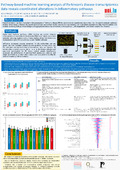
Neuroinflammation may be a critical component in the progression of Parkinson's disease (PD), as increasing evidence suggests that it contributes to the degeneration of dopaminergic neurons. Despite extensive research, the underlying molecular pathways that drive neuroinflammation in PD remain largely unknown. However, machine learning and systems-level pathway analyses of omics data have the potential to uncover relevant mechanisms and processes that can help to improve the understanding of neuroinflammation in PD.
Methods:
We apply statistical and machine learning analyses on cross-sectional and longitudinal transcriptomics data from PD patients and controls, investigating both gene level alterations and aggregated functional representations, such as pathway-level, cell compartment-level and protein complex-level features. These higher-level representations allow us to identify coordinated changes in cellular compartments and processes in PD, focusing on inflammatory and immune system pathways. Apart from comparing these features statistically at baseline between patients and controls, we study consistent longitudinal changes in PD over consecutive clinical visits. Finally, we build interpretable machine learning models for motor-stage PD vs. control classification and validate them using a nested cross-validation and testing on independent hold-out data.
Results:
The results highlight significant alterations in individual genes and pathways associated with inflammation and immune response in PD patients vs. controls at baseline and longitudinally in patients only. Specifically, we identified PD progression associated patterns for pathways associated with humoral immune response, complement receptor signaling, and response to cytokine stimuli. For the prediction of baseline diagnostic status, alterations were observed in the transcriptomics of cellular processes related to the production of interleukins, receptor signaling, TNF-alpha/NF-kappa B complex, and B-cell specific protein complexes.
Conclusion:
Overall, our analyses reveal distinct patterns of gene expression alterations in inflammation and immune response pathways in PD patients compared to controls at baseline and longitudinally. These alterations also provided significant information content for building predictive machine learning models. Interestingly, the time series analyses mainly identified different affected genes and pathways than those found altered in the baseline comparison against controls, underscoring the relevance of considering temporal profiles and dynamic biomarkers. These results may contribute to a better understanding of coordinated inflammation and immune system associated changes in PD, with applications in diagnostic and prognostic biomarker development and the prioritization of cellular pathways for drug target discovery.
Disciplines :
Biochemistry, biophysics & molecular biology
Engineering, computing & technology: Multidisciplinary, general & others