BOESEN, E. (2025). Changing lusospheres – Europe, Brazil, Africa. On old and new connections between centers and peripheries. In E. BOESEN, K. H. Arenz, C. D. Cancela, ... A. O. Vieira Senior, Changing lusospheres – Europe, Brazil, Africa. On old and new connections between centers and peripheries. Esch-sur-Alzette, Luxembourg: Melusina Press Luxembourg.
Editorial reviewed
BOESEN, E. (2025). Diversity, conviviality, and entangled traditions. The case of Cape Verdean funerary practices in Luxembourg. In E. BOESEN, K. H. Arenz, C. D. Cancela, ... A. O. Vieira Senior, Changing Lusospheres - Europe, Brazil, Africa. On old and new connections between centers and peripheries (pp. 214-239). Esch-sur-Alzette, Luxembourg: Melusina Press Luxembourg. doi:10.26298/1881-5708
Editorial reviewed
BOESEN, E., Arenz, K. H., Cancela, C. D., & Vieira Junio, A. O. (Eds.). (2025). Changing Lusospheres - Europe, Brazil, Africa. On old and new connections between centres and peripheries. Esch-sur-Alzette, Luxembourg: Melusina Press Luxembourg. doi:10.26298/1881-5708
The present volume is the result of a symposium held at the University of Luxembourg in November 2022. It brought together an international and interdisciplinary group of scholars working on historical and contemporary connections between Portugal, Brazil, Luxembourg, and certain African countries. The objective of our joint project was to understand the movements and relationships in question as historico-politically and socio-culturally interconnected processes. The papers deal with specific migrations and diaspora experiences, as well as with the multiplicity and diversity of the relationships within the space that is created by these processes and that we tentatively describe as “changing lusospheres”. The choice of location was related to the resolution to mark Luxembourg as part of a universe of migrations and encounters that is constituted by Portuguese and wider lusophone mobilities. Systematic research on these historically and culturally complex migration processes is still largely lacking, not least comparative interdisciplinary work on longstanding relationships and movements that connect Europe, Latin America, and Africa. With this edited volume, we aim to contribute to revealing this complexity by a broadening of perspective, more precisely, by a partial shift of focus to the “periphery”, which is represented by Luxembourg in a factual as well as in an emblematic sense.
Editorial reviewed
BOESEN, E. (2025). Divergenz in europäischen Grenzregionen und die moralische Legitimität der Wohnmigration. Borders in Perspective, (10), 97-111. doi:10.5281/zenodo.15411184
Der Beitrag befasst sich mit luxemburgischen Bewohnern deutscher Grenzdörfer, d. h. mit einer Gruppe von Migranten, bei der das bei Migrationsvorgängen gemeinhin anzutreffende Ungleichheitsverhältnis nicht vorherrscht, ja teilweise ins Gegenteil verkehrt ist: Die Migranten sind hier nicht arm und benachteiligt, sondern sozio-ökonomisch häufig überlegen und in bestimmten Bereichen, etwa dem des Arbeitsmarktes, privilegiert. Die Analyse der Umzugsgeschichten zeigt jedoch, dass die Migranten mit Problemen konfrontiert sind, die aus der Divergenz der Entwicklungen diesseits und jenseits der Grenze herrühren. Die Beschäftigung mit diesen ‚privilegierten Migranten‘ ist nicht nur im Zusammenhang mit Mobilitätsphänomenen und Ungleichheitsverhältnissen in (west)europäischen Grenzräumen von Belang, sondern auch aufschlussreich im Hinblick auf das generelle Problem der moralischen Legitimität der Migration, das sich in ihrem Fall besonders deutlich stellt: Was rechtfertigt das Verlassen des Herkunftslandes, und womit kann der Anspruch auf das Leben am neuen Ort begründet werden?
Peer reviewed
BOESEN, E. (2025). Diversidade, convivialidade e tradições entrelaçadas. O caso das práticas funerárias Cabo-Verdianas em Luxemburgo. In A. O. Vieira Junior, C. D. Cancela, E. BOESEN, ... K. H. Arenz, Migrações e diásporas em múltiplos espaços: antigas e novas conexões entre Brasil, África e Europa. Belém, Brazil: Paka Tatu.
Ao analisar as práticas funerárias dos imigrantes cabo-verdianos, o artigo aborda a questão de como as diferenças culturais são percebidas e vivenciadas como um elemento de convivência numa sociedade superdiversa como a luxemburguesa. A chegada de imigrantes cabo-verdianos no início da década de 1970 desafiou a política de imigração do país, que se baseava no princípio da homogeneidade cultural. O estudo da cultura funerária cabo-verdiana, ou seja, de uma esfera onde parece reinar a adesão a crenças e práticas católicas romanas comuns, lança luz sobre a complicada relação entre diferença, visibilidade e reconhecimento social. O artigo também contribui para o crescente campo de pesquisa sobre transnacionalismo religioso e sobre a mobilidade do catolicismo popular em particular.
Vieira Junior, A. O., Cancella, C. D., BOESEN, E., & Arenz, K. H. (Eds.). (2025). Migrações e diásporas em múltiplos espaços: antigas e novas conexões entre Brasil, África e Europa. Belém, Unknown/unspecified: Paka Tatu.
BOESEN, E. (2024). Border-Crossing and “Temporal Otherness” in the Greater Region SaarLorLux: Residential Migrants’ Experiences of Divergence. Borders in globalization review, 6 (1), 120-130.
The paper deals with border crossing and experiences of ‘temporal otherness’ of residential migrants who move their home from Luxembourg to the German side of the river Moselle. Research on temporal borders is highly influenced by a particular spatio-political relation: the West creating its underdeveloped other and coping with this other by controlling border crossing, which in turn results in maintaining the idea of the other’s temporal remoteness. The Luxembourg-German border region offers a complement to this perspective; here one encounters migrants who move in the opposite temporal direction and appreciate certain forms of ‘being behind’ in their new place of residence. These migrants are confronted not only with difference but with disparate developments. They must cope with divergences, i.e., with the fact that economic and socio-cultural conditions within their new socio-spatial universe, the cross-border region, have evolved in different directions. The paper argues that the analysis of migrants’ memories is elucidating with respect to the question of the moral legitimacy of moving and thus to the conception and everyday construction of cross border communities. It sheds light on the fact that borderland research by focusing on national difference and related conceptions of cross-border mobility and exchange tends to ignore borderlanders’ notions of (regional) unity and ensuing claims for convergence.
Editorial Reviewed verified by ORBi
BOESEN, E. (May 2023). Rezension: Köhler, Florian, Space, place and identity: Wodaabe of Niger in the 21st century. Journal of the Royal Anthropological Institute, 29 (2), 469-470.
BOESEN, E. (2023). Negotiating the aesthetics of mourning in Luxembourg: on pre-modern forms in post-modern spaces. In D. House, M. Westendorp, ... A. Maddrell (Eds.), New Perspectives on Urban Deathscapes Continuity, Change, and Contestation (pp. 83 - 106). Cheltenham, United Kingdom: Edgar Elgar.
Comparative studies on funeral cultures are mainly concerned with differences related to religious diversity. On Luxembourgish cemeteries, religious differences have been, until recently, largely irrelevant. An explanation for this can be found in the country’s immigration policy that was based on the principle that religious conformity, i.e. adherence to Roman Catholicism, be a condition for immigration. This did not prevent the country’s urban cemeteries from becoming representations of a culturally diverse immigration society. The paper concentrates on the funeral culture of Cape Verdean migrants, which is characterized by collective ritual mourning and puts into question conventional distinctions of public/private and sacred/mundane spaces. By analyzing various aspects of the negotiation of funeral aesthetics – the materiality of the grave, the expressive modes of mourning, and the social encounters involved – the author makes a plea for a more encompassing understanding of the notion of ‘deathscape’ that transcends fundamental dimensions of the modern functional differentiation of space.
Peer reviewed
BOESEN, E., BUDACH, G., ALBERT, I., MURDOCK, E., NIENABER, B., Barros, S., Campill, M., Delgado, S., & Navalha, M. (2023). Migration and Conviviality: Living with Difference in Luxembourg. Human Arenas. doi:10.1007/s42087-023-00366-2
In recent years, the social sciences and humanities have been increasingly interested in diversity and everyday life. Rather than focusing on the negative aspects of diversity, such as the lack of social cohesion, interethnic conflict and segregation, they have gradually turned to studying concrete examples of intercultural communal life. This new perspective is reflected in expressions like 'prosaic multiculture' or 'everyday cosmopolitanism' and, most importantly, in the notion of 'conviviality'. The article explores diversity and ways of living together in Luxembourg. Referring to examples from various research projects, it offers an exploratory journey into understanding how difference is being constructed, experienced and negotiated in everyday encounters. Luxembourg shows historical and sociocultural particularities that make it an interesting case for comparison. These particularities can be summarised in a series of seeming opposites. Luxembourg is very small but superdiverse. It is highly urbanised but shows persistent rural social structures. It has no colonial past but is nevertheless part of considerable global historical entanglements. It combines a high degree of traditionalism with equally remarkable cosmopolitan traits. The article concentrates on two dimensions that can be characterised as visible versus invisible moments of diversity: the importance of multilingualism and the impact of non-European immigration on national multiculture. By distinguishing the visible and the invisible and thus linking research on conviviality to explorations of the relation between perception and social recognition, we hope to contribute to the debate on conviviality and especially to the question of how it relates to power inequalities and conflict.
Peer Reviewed verified by ORBi
BOESEN, E. (2022). Rezension: Laura Caregari et al., Gudden Appetit. Hemecht: Zeitschrift für Luxemburger Geschichte, 74 (1).
BOESEN, E. (2020). Moving from nation into region. Experiences and memories of cross-border dwelling in the Greater Region SaarLorLux. In C. WILLE & B. NIENABER (Eds.), Border Experiences in Europe. Everyday Life - Working Life - Communication – Languages (pp. 127-142). Baden-Baden, Germany: Nomos.
BOESEN, E., Schnuer, G., & WILLE, C. (2020). Migration and Urbanity in Rural Areas. Developments in the German-Luxembourg Border Region. In F. Weber, C. WILLE, B. Caesar, ... J. Hollstegge, Geographien der Grenzen. Räume – Ordnungen – Verflechtungen (pp. 319-342). Wiesbaden, Unknown/unspecified: Springer VS. doi:10.1007/978-3-658-30950-3_15
Studies on the connection between migration and urbanity are usually concerned with conditions and developments in cities. The presence of ‘urbanity’ in rural space is the topic of the present contribution. It will be discussed using the example of residential migration in the Greater Region SaarLorLux. The massive influx of residential migrants from Luxembourg into the border regions of the neighbouring countries is a relatively recent phenomenon, the main cause of which lies in the developments in the real-estate market in the Grand Duchy of Luxembourg. This phenomenon is of special interest for the topic of migration in rural areas in two regards: because of the important demographic changes produced by the residential migrants in individual border villages and because of the complex composition of the group of residential migrants, which is extremely differentiated regarding the dimension rural – urban. Central to the article is the question, whether urban attitudes and practices become visible in German border villages, and, if so, how the migratory movement from Luxembourg influences this ‘rural urbanity’. Furthermore, taking the everyday practices of the residential migrants as starting point, it asks in how far the dichotomy urbanity - rurality presents a conceptual approach for the examination of individual and structural integration processes.
Peer reviewed
BOESEN, E. (2019). Flowers and stones. Portugiesische und kapverdische Begräbniskulturen in Luxemburg. In S. KMEC, R. L. Philippart, ... A. Reuter (Eds.), Ewige Ruhe?/Concession à perpétuité? Grabkulturen in Luxemburg und den Nachbarregionen/Cultures funéraires au Luxembourg et dans les régions voisines (pp. 95-102). Luxembourg, Luxembourg: capybarabooks.
BOESEN, E., & SCHNUER, G. (Eds.). (2018). European Borderlands. Living with Barriers and Bridges (paperback edition). (paperback edition). Abingdon, United Kingdom: Routlegde.
BOESEN, E. (November 2017). Einleitung. Hemecht : Zeitschrift für Luxemburger Geschichte = Revue d'Histoire Luxembourgeoise, 3-4 (69), 277-281.
Peer reviewed
SCUTO, D., & BOESEN, E. (Eds.). (November 2017). Histoire du temps présent - Bilan & Perspectives. Actes des 6es Assises de l'historiographie luxembourgeoise, édités par Elisabeth Boesen et Denis Scuto. Hemecht: Zeitschrift für Luxemburger Geschichte, 3-4 (69), 277-436.
Peer reviewed
BOESEN, E. (2017). Introduction: Living in European Borderlands. In E. BOESEN & G. Schnuer (Eds.), European Borderlands. Living with Barriers and Bridges (Border Regions Series) (pp. 1-11). Abingdon, United Kingdom: Routledge.
BOESEN, E., & Gregor, S. (Eds.). (2017). European Borderlands. Living with Barriers and Bridges (Border Region Series). Abingdon, United Kingdom: Routledge.
BOESEN, E., & Schnuer, G. (2017). Dwelling in (Un)Familiarity: Examples from the Luxembourg-German Borderland. In E. BOESEN & G. Schnuer (Eds.), European Borderlands. Living with Barriers and Bridges (Border Regions Series) (pp. 144-158). Abingdon, United Kingdom: Routledge.
RECKINGER, R., WILLE, C., BOESEN, E., & Schnür, G. (2016). Subjectifications and Subjectivations. In C. WILLE, R. RECKINGER, S. KMEC, ... M. HESSE (Eds.), Spaces and Identities in Border Regions. Politics – Media – Subjects (pp. 241-252). Bielefeld, Germany: transcript.
Peer reviewed
WILLE, C., Schnuer, G., & BOESEN, E. (2016). Beyond Luxembourg. Spaces and Identity Constructions in the Context of Cross-Border Residential Migration. In C. WILLE, R. RECKINGER, S. KMEC, ... M. HESSE (Eds.), Spaces and Identities in Border Regions. Politics – Media – Subjects (pp. 326-338). Bielefeld, Unknown/unspecified: transcript.
Peer reviewed
BOESEN, E. (2015). Wohnen jenseits der Mosel. Zur „Wohnmigration“ zwischen Luxemburg und dem deutschen Grenzraum. Forum für Politik, Gesellschaft und Kultur in Luxemburg, (356), 8 -11.
WILLE, C., & BOESEN, E. (2015). Leben jenseits der Mosel. Die neue Auswanderung aus Luxemburg?
BOESEN, E., NIENABER, B., ROOS, U., SCHNUER, G., & WILLE, C. (2015). Phantomgrenzen im Kontext grenzüberschreitender Wohnmigration. Das Beispiel des deutsch-luxemburgischen Grenzraums. Europa Regional, 22 (3-4), 114-128.
Die Schengener Abkommen haben viele europäische Grenzen geöffnet und Grenzkontrollen verschwinden lassen. Der Effekt dieser Öffnung lässt sich besonders gut am Beispiel des deutsch-luxemburgischen Grenzraums beleuchten. Dort haben die nationalstaatlichen Grenzen ihre trennende Wirkung weitgehend eingebüßt, was sich u.a. in der sehr ausgeprägten Alltags- und Wohnmobilität widerspiegelt. Der Beitrag zeigt, dass die vielfältigen grenzüberschreitenden Praktiken die nationalen Grenzen zwar relativiert haben, diese aber in Form neuer Grenzziehungen fortbestehen. Dieser Zusammenhang von Auflösung und gleichzeitigem Fortbestand, wie er in der Denkfigur der „Phantomgrenze“ prägnant gefasst wird, soll am Beispiel der grenzüberschreitenden Wohnmigration untersucht werden. Die Zahl der Luxemburger, die ihren Wohnsitz in die deutschen Bundesländer Saarland und Rheinland-Pfalz verlagern, ist in den vergangenen Jahren deutlich gestiegen. Der Beitrag basiert auf Daten aus vier im saarländischen und rheinland-pfälzischen Grenzraum durchgeführten empirischen Studien, die sich auf methodisch unterschiedliche Art und Weise mit dieser Entwicklung befassen. Die Ergebnisse stimmen grundlegend darin überein, dass die massive Wohnmigration sowohl auf lokaler als auch auf regionaler Ebene neue räumliche Differenzierungen und soziale Grenzziehungen mit sich gebracht hat. Diese materialisieren und manifestieren sich in unterschiedlicher Weise: verkehrsgünstige vs. verkehrsungünstige Lage von Gemeinden, Neubaugebiete vs. Ortskerne, Autochthone vs. Allochthone, Luxemburger vs. Nicht-Luxemburger. In allen diesen Abgrenzungsvorgängen kommt die Persistenz nationaler Ordnungskategorien zum Ausdruck, und sie weisen somit auf das phantomhafte Fortbestehen der territorialen Grenzen im Allgemeinen sowie auf eine klare Inkongruenz von territorialen Grenzen und sozialen Grenzziehungen im Kontext von Wohnmigration im Besonderen hin.
Peer reviewed
BOESEN, E., & SCHNUER, G. (2015). Wohnen jenseits der Grenze. Regionale Integration und ihre lokale Verwirklichung. In C. WILLE (Ed.), Lebenswirklichkeiten und politische Konstruktionen in Grenzregionen. Das Beispiel der Großregion SaaLorLux. Wirtschaft – Politik – Alltag – Kultur (pp. 179-201). Transcript.
Peer reviewed
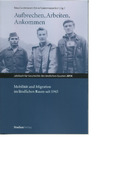
BOESEN, E., Schnuer, G., & WILLE, C. (2015). Urbanität im ländlichen Raum. Wohnmigration in der deutsch-luxemburgischen Grenzregion. In R. Garstenauer & A. Unterwurzacher (Eds.), Aufbrechen, Arbeiten, Ankommen. Mobilität und Migration im ländlichen Raum seit 1945 (pp. 225-244). Innsbruck, Unknown/unspecified: Studienverlag.
Studies on the connection of migration and urbanity are usually concerned with conditions and developments in cities. The possible presence of ‘urbanity’ also in rural space is the topic of the present contribution and will be discussed through the example of residential migration in the ‘Greater Region Saar-Lor-Lux’. The massive influx of residential migrants from Luxembourg into the border regions of the neighbouring countries is a relatively recent phenomenon, the main cause of which lies in the developments in the real-estate market in the Grand Duchy of Luxembourg. This phenomenon is of special interest for the topic of migration in rural areas in two regards: on the one hand, because of the complex composition of the group of residential migrants, which is extremely differentiated regarding the dimension rural - urban; and on the other hand, because of the serious demographic changes, which the residential migrants have produced in individual border villages. Central to our study is the question, whether urban attitudes and practices become visible in German border villages, and, if so, how the migratory movement from Luxembourg influences this ‘rural urbanity’. Furthermore, taking the everyday practices of the residential migrants as starting point, this contribution considers the question, in how far the dichotomy urbanity - rurality presents a conceptual approach for the examination of individual and structural integration processes.
Peer reviewed
BOESEN, E. (2014). Migrations féminines: dimensions économiques et socio-culturelles de la mobilité de femmes wodaabe du Niger. In E. BOESEN & L. Marfaing (Eds.), Mobilités dans l'espace ouest-africain. Ressources, développement local et intégration régionale (pp. 179-203). Paris, France: Karthala.
L’article est consacré aux activités commerciales qui conduisent les femmes wodaabe, nomades du Niger central, vers les métropoles de l’Afrique de l’ouest telles que Bamako ou Dakar. Le cas des Woodaabe est remarquable tout d’abord par le fait que les femmes sont plus mobiles que les hommes. Une autre particularité consiste dans le fait que les voyages et séjours urbains en question sont un phénomène collectif, les femmes voyageant en groupes relativement importants. L’article présente un système complexe de phénomènes de mobilité et cherche à montrer que les divers mouvements – nomadisme pastorale, voyages urbains saisonniers et migrations matrimoniales – sont liés tant sur le plan historico-culturel que socio-économique. D’une part, les voyages ‘modernes’ des Wodaabe s’inscrivent dans un modèle migratoire cyclique imposé par les migrations pastorales. D’autre part, ils résultent de l’indépendance sociale des femmes dans la société des Wodaabe qui se manifeste de la façon la plus frappante dans les migrations matrimoniales. Enfin, cet exemple montre dans quelle mesure les phénomènes de mobilité jouent sur les relations structurelles : la différenciation des modes de mobilité liées au genre est un facteur prégnant de la formation des institutions sociales comme le mariage, le foyer ou encore le lignage.
BOESEN, E., & Marfaing, L. (2014). Mobilité, développement et intégration régionale. Une introduction. In E. BOESEN & L. Marfaing (Eds.), Mobilités dans l'espace ouest-africain. Ressources, développement local et intégration régionale (pp. 7-18). Paris, France: Karthala.
BOESEN, E., & Marfaing, L. (Eds.). (2014). Mobilités dans l'espace ouest-africain. Ressources, développement local et intégration régionale. Paris, France: Karthala.
Ce volume aborde des phénomènes de mobilité spatiale rarement pris en considération dans les débats actuels en sciences sociales où la mobilité est considérée comme un «principe général de la modernité» (Bonß et al. 2004) et célébrée comme un nouveau paradigme. A l'exemple de l’espace Sahara-Sahel, les auteurs traitent ici de variantes « banales » de mobilité et de mouvement dans la mesure où elles représentent des formes élémentaires de recherche de subsistance et de revenu. Ces formes sont le contraire de ce que l’on peut assimiler à des stratégies de « libre choix » ou les expressions d’une individualité moderne. Une des particularités des articles présentés ici est d’analyser diverses formes de mobilité spatiale, tant régionales qu’à travers des exemples classiques de migration européenne, non seulement en fonction de leurs effets économiques sur l'individu et la collectivité d’origine mais aussi des implications locales et régionales qu’elles génèrent. L’objectif de cet ouvrage est ainsi d'attirer l'attention sur le fait que ces mouvements présentent néanmoins un potentiel inhérent de changement et de développement. Les textes ont été rédigés à partir des communications présentés à un atelier de travail interdisciplinaire financé par la Fondation allemande pour la Recherche (DFG), à Bamako en Février 2011. Des études empiriques sur l’espace Sahara-Sahel y ont été mises en lumière dans une perspective "vue de loin", qui compare les conditions politiques et administratives des mobilités en Afrique de l'Ouest. S’y ajoute une perspective « vue de près » qui suggère une conception de mobilité inspirée de celle des nomades sahélo-sahariens et non de celle des voyageurs occidentaux modernes.
BOESEN, E., & Marfaing, L. (Eds.). (2014). Nomadism and mobility in the Sahara-Sahel. Canadian Journal of African Studies, 48 (1). doi:10.1080/00083968.2014
The articles compiled in this volume are based on contributions to the workshop “Nomades et migrants dans l’espace Sahara-Sahel: Mobilité, ressources et développement”, held in Bamako, January 2011. The aim of the workshop was to foster an interdisciplinary debate about systems of mobility and resource utilisation, and about their recent transformations in the Sahara-Sahel region. This region seems particularly well suited for considering these issues and the related questions of local development and regional integration. The present compilation of articles is informed by the question of what empirical studies of different types of “movement” in this particular geographical area can contribute to the ongoing and lively discussion on “mobility” in various academic fields.
Peer reviewed
BOESEN, E., Marfaing, L., & Bruijn, M. D. (2014). Nomadism and mobility in the Sahara-Sahel: introduction. Canadian Journal of African Studies, 48 (1), 1-12. doi:10.1080/00083968.2014.935101
Peer reviewed
RECKINGER, R., WILLE, C., BOESEN, E., & SCHNUER, G. (2014). Subjektivationen und Subjektivierungen. In C. WILLE, R. RECKINGER, S. KMEC, ... M. HESSE (Eds.), Räume und Identitäten in Grenzräumen. Politiken – Medien – Subjekte (pp. 247-257). Bielefeld, Germany: transcript.
Peer reviewed
WILLE, C., SCHNUER, G., & BOESEN, E. (2014). Beyond Luxembourg. Raum- und Identitätskonstruktionen im Kontext grenzüberschreitender Wohnmigration. In C. WILLE, R. RECKINGER, S. KMEC, ... M. HESSE (Eds.), Räume und Identitäten in Grenzregionen. Politiken – Medien – Subjekte (pp. 333-346). Bielefeld, Unknown/unspecified: transcript.
Peer reviewed
BOESEN, E., & Schnuer, G. (03 October 2013). Kosmopolitanismus und Regionalismus in einem europäischen ‘borderland’. Wohnmigration im deutsch-luxemburgischen Grenzraum [Paper presentation]. DGV Tagung 2013, Mainz, Germany.
„Borderlands“ werden zunehmend als ein distinktes ethnologisches Forschungsfeld wahrgenommen. Ein Phänomen, das in diesem Zusammenhang erst in jüngster Zeit Beachtung findet, ist das grenzüberschreitende Wohnen. Der Beitrag befasst sich mit dieser Erscheinung in der Großregion SaarLorLux, d.h. in einem Gebiet, das einerseits aufgrund der besonderen wirtschaftlichen Anziehungskraft des Großherzogtums Luxemburg durch ein außergewöhnliches Maß an Migration und Transnationalismus, andererseits jedoch durch ausgeprägt rurale Strukturen gekennzeichnet ist. Aufgrund dieser besonderen Verhältnisse stellt der deutsch-luxemburgische Grenzraum einen interessanten Kasus für die Untersuchung der Herausbildung von „borderland“-Gemeinschaften und -Identitäten dar. Auf der Grundlage ethnographischer Fallstudien in deutschen Grenzdörfern, die seit einigen Jahren eine bedeutende und sehr diverse Zuwanderung aus Luxemburg erleben, soll gezeigt werden, dass die Integrations- und Identifikationsprozesse in diesem „borderland“ von sehr heterogenen und vermeintlich widerstreitenden Kräften bestimmt sind und darum nur unzureichend durch die geläufigen Konzepte der sozialwissenschaftlichen Mobilitätsforschung – Globalisierung, Transnationalismus, Kosmopolitismus etc. – erfasst werden können.
RECKINGER, R., BOESEN, E., WILLE, C., Schnür, G., & HESSE, M. (Other coll.). (2013). Subjektivationen und Subjektivierungen. In Räume und Identitäten in Grenzregionen. Politiken – Medien – Subjekte. transcript.
Peer reviewed
BOESEN, E. (2012). Peripheral memories - introduction. In E. BOESEN, F. Lentz, M. MARGUE, D. SCUTO, ... R. WAGENER (Eds.), Peripheral memories. Publlic and private forms of experiencing and narrating the past (pp. 7-20). Bielefeld, Unknown/unspecified: transcript.
BOESEN, E. (2012). The family as a social frame of reference. The example of Luxembourgian farmer families. In E. BOESEN, F. Lentz, M. MARGUE, D. SCUTO, ... R. WAGENER (Eds.), Peripeheral memories. Public and private forms of experiencing and narratibg the past (pp. 95-120). Belefeld, Unknown/unspecified: transcript.
BOESEN, E., Lentz, F., MARGUE, M., SCUTO, D., & WAGENER, R. (Eds.). (2012). Peripheral memories. Public and private forms of experiencing and narrating the past. Bielefeld, Germany: transcript.
After a period of intensive work on national memory cultures, we are observing a growing interest in memory both as a social and an individual practice. Memory studies tend to focus on a particular field of memory processes, namely those connected with war, persecution and expulsion. In this sense, the memory – or rather the trauma – of the Holocaust is paradigmatic for the entire research field. The Holocaust is furthermore increasingly understood as constitutive of a global memory community which transcends national memories and mediates universal values. The present volume diverges from this perspective by dealing also with everyday subjects of memory. This allows for a more complete view of the interdependencies between public and private memory and, more specifically, public and family memory.
BOESEN, E. (2011). Lebensplanung und Familiengeschick. Soziale Transformationsprozesse und familiäre Tradierung bei luxemburgischen Bauern. In J. Kroh & S. Nuenkirch (Eds.), Erzählte Zukunft. Zur inter- und intragenerationellen Aushandlung von Zukunft (pp. 95-115). Göttingen, Germany: Wallstein Verlag.
Bauern stellen im Hinblick auf das Phänomen der Biographisierung des Lebenslaufs, das seit etwa zwei Jahrzehnten in den Sozialwissenschaften intensiv diskutiert wird, einen interessanten, weil eigentlich paradoxen, Kasus dar: Individualisierungsprozesse gehen hier in bedeutendem Maße mit Rudimenten vormoderner Verfasstheit einher, was u.a. daran sichtbar wird, dass standardisierte und institutionalisierte Lebensläufe, wie sie in der Moderne entstanden sind und nun, unter spätmodernen Bedingungen, schon wieder zu verschwinden scheinen, sich nur in begrenztem Maße überhaupt entwickeln konnten. Die folgenden Beispiele luxemburgischer Bauernfamilien zeigen etwa, dass sich die konzeptuelle und lebenspraktische Trennung der Jugend als Entwicklungs- und Bildungsphase von dem durch Erwerbs- bzw. Reproduktionstätigkeit geprägten Erwachsenenalter noch in der Nachkriegsgeneration nur partiell durchgesetzt hatte. Einen vormodernen Zug weisen die untersuchten Familien auch aufgrund der dem bäuerlichen Betrieb inhärenten Eigenart auf, dass die funktionale Scheidung der Sphären von Familie/Haushalt und Arbeit aus praktischen wie ideellen Gründen nur begrenzt möglich ist. Im Folgenden werden jeweils drei Vertreter zweier Bauernfamilien im Hinblick auf ihre biographischen Selbstdarstellungen knapp vorgestellt. Der weitere Vergleich zwischen den beiden Familien wird die Frage behandeln, ob in den Darstellungen der drei aufeinander folgenden Generationen eine Entwicklung hin zu größerer biographischer Offenheit und individueller Lebensplanung zu erkennen ist. Dabei wird auf einen Aspekt hingewiesen, der, so die These, bisher zu wenig untersucht wurde, nämlich den Einfluss familiärer Transmissionsprozesse, d.h. materieller und immaterieller Erbvorgänge, auf die individuellen Zukunftsorientierungen.
BOESEN, E., & SCUTO, D. (2011). Historical testimony and social transformation. On memory processes in farmer and steel worker families in Luxembourg. Journal of Comparative Family Studies, 42 (3), 339-353.
Cet article aborde la question si, à côté de grands événements historiques comme la Seconde Guerre Mondiale, des expériences d’évolution graduelle sont transmises d’une génération à l’autre au sein de la famille et, si tel est le cas, si les mémoires familiales constituent un moment de la production de représentations collectives. En s’appuyant sur l’analyse d’interviews narratives dans des „familles de trois générations“, les auteurs comparent des familles de paysans et d’ouvriers et par conséquent deux milieux sociaux qui ont été confrontés à de grandes transformations au cours des dernières décennies. L’analyse comparative part de l’hypothèse – qu’elle réfute ensuite – que des facteurs socioculturels ou, plus précisément, l’héritage et des relations d’héritage influencent beaucoup plus les processus mémoriaux dans les familles de paysans que dans les familles ouvrières et rendent ainsi difficiles l’intégration ou la ‚coproduction’ de mémoires familiales et d’une mémoire collective du changement social.
Peer Reviewed verified by ORBi
BOESEN, E. (2010). Migration und Erinnerung. Einleitung / Migration et mémoire. Introduction. In E. BOESEN & F. Lentz (Eds.), Migration und Erinnerung. Konzepte und Methoden der Forschung / Migration et mémoire. Concepts et méthodes de recherche (pp. 1-27). Münster, Unknown/unspecified: Lit Verlag.
BOESEN, E. (2010). Wodaabe women and the outside world. In U. Freitag & A. von Oppen (Eds.), Translocality. The study of globalisingprocesses from a southern perspective (pp. 25-54). Leiden, Unknown/unspecified: Brill.
Peer reviewed
BOESEN, E., & Lentz, F. (Eds.). (2010). Migration und Erinnerung. Konzepte und Methoden der Forschung / Migration et mémoire. Concepts et méthodes de recherche. Münster, Germany: Lit Verlag.